From 252,000 GitHub Stars to Step AOS: Which Agent Opportunity Should Ordinary People Bet On in the July Boom?
Bilingual Feature|English & Chinese
English version first. The complete Chinese version begins after 中文版.
In July 2026, the global AI Agent market appeared to hit the fast-forward button.
On July 7, OpenClaw reportedly reached 252,000 GitHub stars, overtaking React to become one of the most-starred open-source projects in GitHub history. It took only a few months to challenge a record accumulated over more than a decade, with peak daily growth reaching approximately 17,000 stars.
The open-source Agent, affectionately nicknamed “the Lobster” by developers, did more than create a GitHub phenomenon. It brought autonomous Agents out of technical circles and into mainstream discussion.
Six days later, on July 13, StepFun introduced three major pieces of its Agent strategy in Shanghai:
Step AOS, an Agent-native operating system;
Step Leap Amo, a new-generation personal Agent;
STEPX, an AI-native terminal brand, alongside its first smartphone, STEPX Neo.
From foundation models and Agent systems to operating systems and consumer hardware, StepFun presented a full-stack vision.
OpenClaw represents the explosive power of open-source ecosystems.
Step AOS represents system-level integration—the attempt to rebuild the operating environment so that Agents are no longer temporary visitors, but native residents.
The two paths appear very different, yet both point in the same direction:
AI Agents are evolving from experimental tools into a new layer of digital infrastructure.
The question for developers, entrepreneurs and ordinary users is no longer whether the Agent wave will arrive.
It is:
Which part of the Agent economy should you enter?
Why Did OpenClaw Become So Popular?
OpenClaw is not simply another chatbot.
It is positioned as an open-source, local-first and self-hostable autonomous Agent platform. Users can describe an objective in natural language, and the Agent can interact with tools and applications to complete real tasks.
Depending on its configuration, OpenClaw may help users:
Organize email;
Manage calendars;
Collect and structure data;
Update documents and spreadsheets;
Connect multiple office applications;
Execute repetitive digital workflows.
Three characteristics helped it attract such a large developer community.
1. A Model-Agnostic Architecture
OpenClaw is not permanently tied to one foundation-model provider.
Developers can connect it to models and services such as:
Claude;
GPT;
Gemini;
DeepSeek;
Local Ollama models;
Other compatible APIs.
This gives users more freedom to balance capability, privacy, availability and cost.
A difficult reasoning task may be routed to a premium model, while repetitive work can be sent to a cheaper or locally deployed model.
In an industry where model performance and pricing change rapidly, this flexibility is extremely valuable.
2. A Rapidly Expanding Skill Ecosystem
OpenClaw’s real strength may not be the Agent itself, but the capabilities built around it.
Its Skill ecosystem allows developers to package repeatable workflows into reusable modules. Instead of rebuilding the same integration for every project, users can install a Skill and give the Agent a new capability.
A Skill may enable the Agent to:
Read a specific business system;
Process documents;
Create reports;
Operate collaboration software;
Search internal knowledge;
Trigger an automated workflow.
This changes the economic meaning of software development.
A developer is no longer producing only code for one customer or one project.
The developer can package expertise once and distribute it repeatedly.
Skills are becoming reusable digital assets.
The person who learns how to convert professional knowledge into standardized Agent capabilities may gain an important position in the emerging ecosystem.
3. Strong Integration With Everyday Workflows
OpenClaw also attracted attention by connecting with workplace ecosystems familiar to developers, including document, spreadsheet and file-management environments.
An Agent becomes far more valuable when it can move beyond conversation and operate inside real workflows.
The decisive step is not making the model more articulate.
It is allowing the Agent to:
Create a table;
Modify a cell;
Upload a file;
Organize project information;
Update a shared document;
Complete a task across several systems.
This is the shift from “AI that talks” to “AI that acts.”
Open Source Proved the Possibility—but Also Exposed the Friction
OpenClaw’s popularity demonstrated that users want Agents capable of completing real work.
It also exposed the limitations of the open-source path.
Powerful open-source systems often require users to handle:
Installation;
Environment configuration;
Model credentials;
Network settings;
Tool permissions;
Updates;
Security maintenance.
For experienced developers, this flexibility is attractive.
For ordinary users, it can become a serious barrier.
High installation complexity has even created a market for paid installation and configuration services. The Agent software may be open source, yet successfully deploying it can still require significant technical support.
This illustrates the central contradiction of open-source Agents:
The capability already exists, but usability has not fully caught up.
OpenClaw answered the question:
What can an Agent do?
But it did not completely answer:
How can everyone use it safely and easily?
Step AOS Takes a Different Route
StepFun’s strategy begins from a more fundamental assumption:
If Agents are going to become a primary form of computing, they need an operating system designed around them.
StepFun CEO Yin Qi used a useful metaphor:
If an Agent is given only a door into an old operating system, it will always remain a visitor. Build it a house, and it can become a native resident.
Traditional operating systems were designed around a human user opening applications, clicking buttons and moving information manually.
Agents do not naturally work that way.
They need continuous access to memory, permissions, tools, data and execution environments.
Step AOS attempts to rebuild the system around those requirements.
The Three Walls Limiting Today’s Agents
Traditional operating systems create three major barriers for autonomous Agents.
The Memory Wall
User data is scattered across applications, devices and cloud services.
An Agent may remember the current conversation but fail to maintain a reliable long-term understanding of the user’s work, preferences and past decisions.
Without persistent, structured memory, every new task begins with incomplete context.
The Decision Wall
Traditional systems do not provide a native planning chain for Agents.
Applications wait for explicit user commands. The Agent often has to coordinate multiple tools through an external framework, creating fragmented and fragile workflows.
The Action Wall
Most Agents lack a recognized system identity.
They cannot directly invoke every function as a trusted system participant. Instead, they may rely on simulated clicks, browser automation or temporary connectors.
That makes execution slower, less reliable and more difficult to govern.
Turning the Agent From a Visitor Into a Native Resident
Step AOS aims to expose hardware, data and software capabilities as resources that Agents can call directly.
The user expresses an intention.
The Agent handles the process.
Instead of asking a person to:
Open a travel application;
Search for tickets;
Compare schedules;
Open a payment tool;
Add the trip to a calendar;
Notify colleagues;
an Agent-native system could potentially coordinate the entire chain.
The interaction model changes from:
Human operates applications
to:
Human states a desired result, and the Agent coordinates the applications.
This is not merely a more convenient interface.
It is a change in the underlying computing paradigm.
Memory and Multi-Brain Collaboration
Step AOS emphasizes a dual-domain memory structure and cloud-edge collaboration.
Simple tasks can be handled quickly through local or edge capabilities, while complex tasks can invoke more powerful cloud-based models.
This creates a layered intelligence system:
Fast local responses for routine tasks;
Deeper cloud reasoning for complex problems;
Persistent memory across interactions;
Multiple models cooperating according to task requirements.
This architecture may become increasingly important as Agents enter consumer devices.
Users do not want every simple request to travel through an expensive frontier model.
Nor do they want a low-cost local model handling every difficult decision.
The operating system must route intelligently between them.
From Agent Software to AI-Native Hardware
The introduction of the STEPX hardware brand and STEPX Neo smartphone extends the strategy from software into physical devices.
An AI-native terminal can potentially provide Agents with deeper access to:
Device sensors;
Local files;
Applications;
Communication tools;
Location context;
System functions.
StepFun has also announced collaboration with platforms and applications in travel, payments, transportation, local services, office productivity and content creation.
The strategic objective is clear:
Do not build another Agent plugin.
Build the environment in which many Agents can live.
Beyond Capability and Environment, There Is a Third Track
OpenClaw addresses the distribution of Agent capabilities.
Step AOS addresses the environment in which Agents operate.
But another critical question remains:
Who supplies the Tokens and model capacity consumed by those Agents—and how are those resources priced, routed and settled?
Every Agent action consumes resources.
A single workflow may involve:
Understanding intent;
Retrieving documents;
Calling several models;
Operating external tools;
Verifying results;
Revising failures;
Maintaining memory.
As Agents become more capable and run for longer periods, Token costs can grow quickly.
The Agent economy therefore needs not only applications and operating systems, but also a market for intelligence and compute.
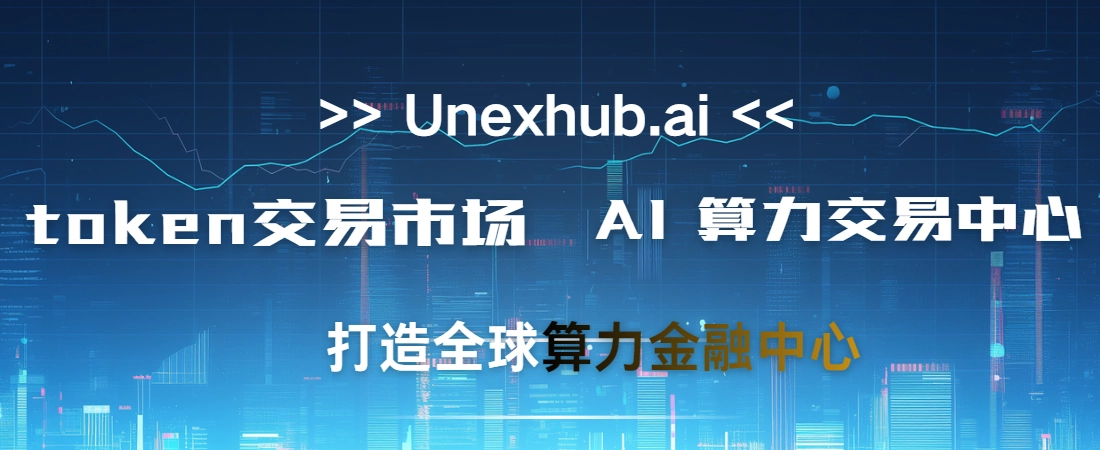
This is the layer Unexhub is building.
Unexhub: The Token and Compute Trading Layer
Unexhub is positioning itself as a Token aggregation and distribution center—a compute trading hub connecting model suppliers, specialized AI providers, developers and enterprise customers.
Its objective is to make AI model capacity:
Tradable;
Metered;
Routable;
Competitively priced;
Rapidly settled.
Unexhub has been building access to models and services from providers such as:
Gemini;
ChatGPT;
Claude;
DeepSeek;
GLM;
Specialized models from individuals and small or medium-sized suppliers.
Instead of requiring developers to integrate each model separately, the platform aims to provide a unified access and distribution network.
1. Pay According to Actual Token Usage
Developers can pay according to actual Token consumption instead of maintaining multiple accounts, subscriptions and prepaid balances across providers.
This is particularly valuable for Agent applications because workloads are rarely uniform.
A simple classification request may need only a low-cost model.
A difficult planning task may require a premium frontier model.
A video or multimodal workflow may need several different services.
Unified Token-based billing makes it easier to understand what each task actually costs.
2. Competitive API Supply
Unexhub is developing an API bidding and competitive supply model.
Rather than relying only on a fixed price from one provider, available suppliers can compete to serve eligible requests.
The routing system may consider:
Capability;
Price;
Latency;
Availability;
Context length;
Region;
Task type;
Enterprise policy.
For developers and businesses, this creates the possibility of lower prices when capacity is abundant.
Under applicable supply and service conditions, selected calls may be available at prices as low as approximately 30% of prevailing official rates.
For high-frequency Agent workloads, the long-term impact can be substantial.
A lower Token price can make previously expensive applications commercially viable.
3. Millisecond-Level Routing
A marketplace is useful only when it can match the request to an appropriate supplier quickly.
Unexhub’s millisecond-level routing layer is designed to direct tasks according to quality, cost and availability requirements.
An enterprise could define:
Premium models for complex reasoning;
Balanced models for everyday workflows;
Lower-cost models for batch tasks;
Backup providers for service interruptions;
Approved routes for sensitive data.
The goal is not to use the cheapest model for every task.
It is to use the lowest-cost model capable of meeting the required quality and risk threshold.
4. Faster Settlement for Suppliers
Traditional API distribution often involves long billing cycles.
That can create significant cash-flow pressure for smaller model and compute providers.
Unexhub’s usage-based settlement model is intended to let suppliers recover revenue more quickly according to actual calls.
Rather than waiting through a lengthy reconciliation period, a supplier can connect capacity, serve requests and receive the corresponding revenue on a faster cycle.
This does not literally eliminate every operating expense, but it can significantly reduce the financing pressure created by delayed payments.
5. Early Supplier Incentives
Eligible early suppliers may receive platform incentives, including commission rates as low as 0% under applicable programs.
This allows emerging suppliers to:
Test market demand;
Reach enterprise and developer customers;
Build call volume;
Preserve more early-stage revenue;
Reduce initial channel costs.
Combined with one-click channel access and faster settlement, the incentive lowers the barrier to participating in the Token marketplace.
Three Paths, Three Layers of the Agent Economy
When OpenClaw, Step AOS and Unexhub are viewed together, the structure becomes clearer.
| Track | Main Role | Core Question |
|---|---|---|
| OpenClaw | Capability distribution | What can the Agent do? |
| Step AOS | Native execution environment | Where and how should the Agent operate? |
| Unexhub | Token and compute circulation | Which resources power the Agent, at what price? |
OpenClaw distributes capabilities through open source and Skills.
Step AOS rebuilds the environment so Agents can act as native system participants.
Unexhub turns model access and Token capacity into routable, tradable resources.
One builds the shops.
One builds the city.
One supplies the water and electricity.
The Agent ecosystem needs all three.
Which Track Should Developers Choose?
For developers, the OpenClaw-style Skill ecosystem may offer the most immediate opportunity.
The Skill market is becoming an exchange for reusable AI capabilities.
A developer can convert knowledge into a standardized component:
A document-processing Skill;
A financial-analysis Skill;
A sales-automation Skill;
A security-review Skill;
A code-migration Skill;
A local-service Skill.
Instead of selling time repeatedly, developers can create a capability once and distribute it globally.
The opportunity is not limited to building another chatbot.
It lies in packaging domain knowledge into Agent-executable workflows.
The strongest developer advantage may be:
Knowing how to transform expertise into a reusable Skill.
Which Track Should Entrepreneurs Choose?
Entrepreneurs should pay close attention to the system-level opportunities represented by Step AOS.
When the operating paradigm changes from:
People operate applications
to:
Agents complete outcomes for people
the application ecosystem must also change.
Future products may no longer be designed primarily around menus, pages and buttons.
They may expose capabilities directly to Agents.
This creates opportunities in:
Agent-native applications;
Identity and permission systems;
Memory infrastructure;
Tool protocols;
Agent marketplaces;
AI-native hardware;
Cross-application orchestration;
Security and audit systems.
The company that controls the primary Agent distribution and execution environment could occupy a position similar to an operating-system or app-store owner.
That is a much larger opportunity than building one isolated Agent.
Which Track Should Ordinary Users Watch?
For ordinary users and small teams, the infrastructure opportunity represented by Unexhub may be the most practical to watch.
Most users will not build an operating system.
Many will not maintain a large open-source Agent project.
But nearly everyone using Agents will need affordable access to models and Tokens.
The immediate value lies in:
Lower model prices;
More model choices;
Pay-per-use billing;
Automatic routing;
Reduced dependence on one provider;
Easier access to high-quality Agent capabilities.
Rather than treating Tokens as a speculative financial asset, ordinary users can view them as a metered resource—similar to cloud compute, bandwidth or electricity.
The practical opportunity is not necessarily “buy low and sell high.”
It is gaining access to intelligence at a lower and more transparent cost.
For developers and small businesses, selected pricing as low as approximately 30% of official rates can meaningfully reduce the cost of:
Building Agent prototypes;
Running automated customer support;
Processing large document sets;
Generating content in batches;
Testing several models;
Scaling an application after validation.
Do Not Bet on One Track Alone
Although the three paths serve different participants, the strongest opportunities may appear where they intersect.
A developer could:
Build a professional Skill;
Distribute it through an open Agent ecosystem;
Run it on an Agent-native operating environment;
Use Unexhub to route the underlying model calls;
Reduce Token costs;
Earn revenue from repeated use.
An entrepreneur could build an Agent application without training a foundation model.
A small model supplier could distribute specialized capacity without constructing an entire sales channel.
An enterprise could combine multiple providers without maintaining separate integrations for each one.
The Agent economy will not be won by only one layer.
The largest value may emerge from connecting capability, environment and resources.
The Agent “App Store Moment” Is Approaching
The mobile-app economy became transformative only when several pieces aligned:
Smartphones became capable enough;
Developers gained distribution;
Users gained simple discovery;
Payments became standardized;
Infrastructure scaled globally.
The Agent ecosystem is approaching a similar moment.
Skills are becoming applications.
Agent platforms are becoming runtime environments.
Agent-native operating systems are becoming distribution and execution layers.
Token marketplaces are becoming resource and settlement infrastructure.
The final commercial loop may look like this:
Professional knowledge
→ Skill packaging
→ Agent distribution
→ Native execution
→ Token consumption
→ Market routing
→ Revenue settlement
OpenClaw demonstrates the viral energy of open ecosystems.
Step AOS demonstrates the need for an Agent-native home.
Unexhub is building the resource network that can keep that home running.
The Risks Behind the Opportunity
The Agent boom is real, but so are the risks.
Open-Source Agent Risks
Difficult installation;
Weak default security;
Unverified Skills;
Credential exposure;
Maintenance burden.
Agent Operating-System Risks
Excessive system permissions;
Privacy concerns;
Platform lock-in;
Complex identity governance;
Unclear application boundaries.
Token Marketplace Risks
Supplier quality variation;
Routing transparency;
Data-retention differences;
Service reliability;
Price volatility;
Compliance obligations.
Therefore, users should not choose purely based on popularity or price.
They should evaluate:
Who operates the service;
Which model actually processes the request;
What data is retained;
How permissions are controlled;
Whether activity can be audited;
How failures are handled;
Whether an alternative route exists.
The Agent economy needs speed.
It also needs trust.
The Bottom Line
July 2026 delivered three different signals.
OpenClaw showed that an open-source Agent can mobilize a global developer community in months.
Step AOS showed that Agents may eventually require their own native operating environment rather than remaining plugins inside human-centered systems.
Unexhub represents the third layer: a Token aggregation, routing and settlement network that can supply those Agents with flexible model capacity.
The three tracks correspond to three ecosystem roles:
Build the capabilities;
Build the environment;
Supply the resources.
For developers, the opportunity lies in turning expertise into reusable Skills.
For entrepreneurs, it lies in rebuilding applications, identity, memory and distribution around Agent-native systems.
For ordinary users and small businesses, it lies in gaining lower-cost, more flexible access to models through infrastructure such as Unexhub.
Unexhub’s unified access to Gemini, ChatGPT, Claude, DeepSeek, GLM and other suppliers, combined with millisecond routing, pay-per-Token billing and selected prices as low as approximately 30% of official rates, can make high-frequency Agent usage more economically sustainable.
For eligible suppliers, one-click access, faster usage settlement and early-stage commission rates as low as 0% can reduce the cost of reaching demand.
OpenClaw proved that Agents can capture global attention.
Step AOS argues that Agents need a house of their own.
Unexhub is helping supply that house with intelligence and compute.
The Agent ecosystem’s App Store moment has not fully arrived.
But the foundation is being laid quickly.
Which path should you choose?
It depends on whether you want to build the house, supply its utilities—or open the next successful store inside it.
中文版
从25.2万星标到阶跃AOS:7月智能体大爆发,普通人该押哪条赛道?
2026年7月,AI智能体赛道仿佛突然被按下了快进键。
7月7日,OpenClaw的GitHub星标数据称升至25.2万,超越React,跻身GitHub历史上最受关注的开源项目之列。从项目启动到改写十余年积累的开源纪录,仅用了几个月,单日星标最高增幅约达1.7万。
这款被开发者亲切称为“龙虾”的开源AI智能体,不只是制造了一场GitHub现象。
它把自主智能体从技术圈带进了大众视野。
6天后的7月13日,阶跃星辰在上海集中发布了三项重要成果:
智能体原生操作系统阶跃AOS;
新一代个人智能体阶跃阿莫;
AI原生终端品牌STEPX及首款智能手机STEPX Neo。
从基础模型、智能体系统,到操作系统与硬件终端,阶跃星辰展示了一套全栈式路线。
OpenClaw代表开源生态的爆发力。
阶跃AOS代表系统级整合能力——不再只是在传统操作系统上增加一个AI插件,而是试图从底层重构环境,让智能体从“访客”变成“原住民”。
两条路径看似不同,却指向同一个方向:
智能体正在从实验性玩具,跃迁为新一代数字基础设施。
对开发者、创业者和普通用户来说,问题已经不再是智能体浪潮会不会到来。
而是:
智能体经济中的哪一层,最值得你进入?
OpenClaw为什么能火?
OpenClaw本质上并不是普通聊天机器人。
它是一款开源、本地优先、支持自托管的自主智能体平台。用户通过自然语言表达目标,智能体再调用工具和应用,完成真实任务。
根据具体配置,OpenClaw可以协助用户:
整理邮件;
管理日程;
收集与结构化数据;
更新文档和表格;
联动多款办公软件;
自动执行重复性数字工作流。
三项能力帮助它迅速吸引了全球开发者。
第一,多模型开放架构
OpenClaw并不永久绑定某一家基础模型供应商。
开发者可以根据需要接入:
Claude;
GPT;
Gemini;
DeepSeek;
本地Ollama模型;
其他兼容API。
这让用户可以在能力、隐私、可用性和成本之间灵活平衡。
高难度推理交给旗舰模型,重复性工作则交给低成本或本地模型。
在模型能力与价格快速变化的行业中,这种灵活性十分重要。
第二,快速扩张的Skill生态
OpenClaw真正的竞争力,可能并不只是智能体本身,而是围绕智能体形成的能力生态。
开发者可以把重复工作流封装成Skill。其他用户不必从头开发,只需要安装一项Skill,就能为Agent增加新能力。
一项Skill可能让智能体:
读取特定业务系统;
处理文档;
自动生成报告;
操作协作软件;
检索内部知识;
启动自动化工作流。
这改变了软件开发的经济意义。
开发者不再只为一个客户或单个项目写代码。
他可以把专业能力封装一次,然后重复分发。
Skill正在成为可复用的数字资产。
谁能率先把行业知识转化为标准化智能体能力,谁就更可能在Agent生态中占据有利位置。
第三,与真实办公工作流打通
OpenClaw还通过连接文档、表格和文件管理等日常工作环境,展示了智能体的实际价值。
当Agent能够离开聊天窗口,进入真实业务流程,其价值才会真正放大。
决定性变化不是模型变得更会说话。
而是它能否:
创建表格;
修改单元格;
上传文件;
整理项目资料;
更新共享文档;
跨多个系统完成任务。
这正是从“会说话的AI”走向“会办事的AI”。
开源验证了可行性,也暴露了使用门槛
OpenClaw的爆发证明,用户确实需要能够完成真实工作的智能体。
但它也暴露了开源路径的局限。
高能力开源系统通常要求用户自行完成:
安装部署;
环境配置;
模型凭证接入;
网络设置;
工具权限管理;
版本更新;
安全维护。
对专业开发者而言,这意味着自由。
对普通用户而言,却可能成为难以跨越的门槛。
较高的安装复杂度甚至催生了付费安装和配置服务。软件本身可以开源,但成功部署仍然需要专业技术支持。
这揭示了开源智能体的核心矛盾:
能力已经具备,但易用性尚未完全跟上。
OpenClaw回答了:
智能体能做什么?
却还没有彻底解决:
怎样让每个人都能安全、方便地使用?
阶跃AOS走的是另一条路线
阶跃星辰的策略建立在一个更底层的判断上:
当智能体成为主要计算形态,就需要一套围绕智能体设计的操作系统。
阶跃星辰CEO印奇用过一个生动的比喻:
如果只在旧操作系统上给智能体开一扇门,它永远都是访客;为智能体盖一栋房子,它才能成为原住民。
传统操作系统以人类打开应用、点击按钮和手动传递信息为中心。
智能体天然不适合这种交互方式。
它需要持续调用记忆、权限、工具、数据与执行环境。
阶跃AOS试图围绕这些需求重构系统。
困住智能体的三堵墙
传统操作系统为自主智能体制造了三类主要障碍。
记忆墙
用户数据分散在不同应用、设备与云服务中。
智能体也许记得当前对话,却无法形成稳定、长期的用户认知。
缺乏持久、结构化记忆,智能体每次处理新任务时都只能掌握不完整背景。
决策墙
传统系统并没有为智能体提供原生规划链路。
应用通常等待用户逐步下达命令。智能体只能借助外部框架协调不同工具,导致工作流分散且脆弱。
行动墙
多数智能体没有被系统承认的独立身份。
它们无法像可信系统成员一样直接调用所有功能,只能依赖模拟点击、浏览器自动化或临时连接器。
这使执行过程更慢、更不稳定,也更难治理。
让智能体从访客变成原住民
阶跃AOS希望把硬件、数据和软件能力转化为智能体可以直接调用的资源。
用户只需表达意图。
智能体负责过程。
过去,用户可能需要:
打开旅游应用;
搜索车票;
对比时间;
进入支付工具;
把行程加入日历;
通知同事。
在智能体原生系统中,这整条任务链可能由Agent自主协调完成。
交互方式由:
人操作应用
转向:
人表达结果,智能体协调应用。
这不只是界面变得更方便。
而是计算范式发生变化。
记忆与云边多脑协同
阶跃AOS强调双域记忆与云边协同能力。
简单任务可以通过本地或边缘能力快速完成,复杂任务则调用更强的云端模型。
这将形成分层智能体系:
常规任务本地快速响应;
复杂问题云端深度推理;
跨交互持续保存记忆;
多模型根据任务需求协同工作。
当智能体进入个人设备后,这种结构会越来越重要。
用户不希望所有简单问题都调用昂贵的旗舰模型。
也不希望低成本本地模型独自处理全部困难决策。
操作系统必须能够在两者之间智能调度。
从Agent软件走向AI原生硬件
STEPX品牌与STEPX Neo手机的推出,将阶跃的路线从软件扩展到硬件设备。
AI原生终端能够让Agent更深入地调用:
设备传感器;
本地文件;
系统应用;
通信工具;
位置信息;
系统功能。
阶跃还宣布与旅游、支付、交通、本地生活、办公与内容创作等领域的应用展开合作。
其战略目标十分明确:
不是再开发一款Agent插件。
而是打造能够容纳大量Agent的运行环境。
除了能力和环境,还有第三条赛道
OpenClaw解决的是智能体能力如何分发。
阶跃AOS解决的是智能体在哪种环境中运行。
但还有一个核心问题尚未解决:
智能体持续运行时消耗的Token与模型容量由谁供给,又该如何定价、路由与结算?
每一次智能体行动都需要消耗资源。
一条完整工作流可能包括:
理解任务意图;
检索文件;
调用多个模型;
操作外部工具;
验证结果;
修改失败方案;
保存长期记忆。
智能体越强、运行时间越长,Token成本就越高。
因此,Agent经济不仅需要应用和操作系统,也需要智能与算力的市场。
这正是Unexhub正在建设的基础设施层。
Unexhub:Token与算力交易层
Unexhub正在将自身定位为Token聚合与分发中心,连接模型供应商、专业AI服务商、开发者与企业用户。
它希望让模型容量变得:
可交易;
可计量;
可路由;
可竞争定价;
可快速结算。
Unexhub正在聚合包括以下模型与服务:
Gemini;
ChatGPT;
Claude;
DeepSeek;
GLM;
个人及中小供应商提供的专业模型。
开发者无需分别对接每一家模型厂商,即可通过统一网络调用不同能力。
第一,按照实际Token用量付费
开发者可以根据真实Token消耗进行结算,而不必在多个平台分别维护账号、订阅与预充值余额。
这一点对智能体应用尤其重要,因为不同任务的资源需求差异极大。
简单分类可能只需要低成本模型。
复杂规划需要高端模型。
视频或多模态工作流则可能同时调用多项服务。
统一Token计费能够让开发者更清楚地看到每项任务的真实成本。
第二,竞争性API供给
Unexhub正在推进API竞价与竞争性供给模式。
系统不只依赖单一供应商的固定价格,而是可以在符合条件的供应资源之间进行匹配。
路由可综合考虑:
模型能力;
调用价格;
响应延迟;
服务可用性;
上下文长度;
所在区域;
任务类型;
企业自定义策略。
当市场容量充足时,开发者与企业可能获得更低的模型价格。
在符合供给与服务条件的情况下,部分调用最低可至市场官方价格的约 3折。
对于高频Agent工作流,长期成本优势将更加明显。
更低的Token价格,可能让原本成本过高的应用真正具备商业化条件。
第三,毫秒级路由
一个资源市场只有能够快速匹配需求,才具有实际价值。
Unexhub的毫秒级路由系统,会根据质量、成本与可用性要求,为任务选择合适资源。
企业可以规定:
复杂推理使用旗舰模型;
日常流程使用均衡模型;
批量工作使用低成本模型;
服务中断时切换备用供应商;
敏感数据仅进入获批通道。
目标不是让所有任务都调用最便宜的模型。
而是为每项任务匹配满足质量与风险要求的最低成本模型。
第四,为供应商提供更快结算
传统API渠道往往存在较长账期。
对中小模型与算力供应商而言,这会产生明显现金流压力。
Unexhub的按调用结算机制,希望让供应商按照真实调用更快回收收益。
供应商接入容量、完成请求后,可以在更短周期内获得相应收入,而不必等待漫长的对账过程。
这不代表所有运营成本都会彻底归零,却可以显著减轻延迟回款带来的资金压力。
第五,早期供应商激励
符合条件的早期供应商,还可能在适用计划下获得最低 0抽佣 的平台权益。
这可以帮助新供应商:
验证真实需求;
接触企业与开发者客户;
积累调用规模;
保留更多早期收入;
降低初期渠道成本。
配合一键接入与更快结算,供应商进入Token市场的门槛将进一步降低。
三条路线,对应Agent经济的三层结构
把OpenClaw、阶跃AOS和Unexhub放在一起,整个生态结构会更加清晰。
| 赛道 | 主要角色 | 核心问题 |
|---|---|---|
| OpenClaw | 能力分发 | 智能体能够做什么? |
| 阶跃AOS | 原生运行环境 | 智能体在哪里、如何运行? |
| Unexhub | Token与算力流通 | 用什么资源驱动,价格是多少? |
OpenClaw通过开源与Skill生态分发能力。
阶跃AOS重构运行环境,让智能体成为系统原生成员。
Unexhub则把模型与Token容量转化为可路由、可交易的资源。
一个建商店。
一个建城市。
一个负责供水供电。
Agent生态三者缺一不可。
开发者该押哪条赛道?
对开发者而言,OpenClaw所代表的Skill生态,可能是最直接的机会。
Skill市场正在成为AI能力交易所。
开发者可以把专业知识封装成标准化能力,例如:
文档处理Skill;
财务分析Skill;
销售自动化Skill;
安全审查Skill;
代码迁移Skill;
本地生活服务Skill。
开发者不再只是反复出售个人时间,而可以创建一项能力,面向全球用户持续分发。
机会不在于再做一个聊天机器人。
而在于把垂直行业知识转化为Agent可以执行的工作流。
开发者未来最重要的能力之一,可能是:
把专业经验封装成可复用Skill。
创业者该押哪条赛道?
创业者应重点关注阶跃AOS所代表的系统层机会。
当操作范式从:
人操作应用
转变成:
智能体替人完成结果
应用生态也必须重新设计。
未来的产品可能不再主要围绕菜单、页面和按钮构建,而是把能力直接开放给智能体。
这会产生大量新机会:
智能体原生应用;
身份与权限系统;
记忆基础设施;
工具调用协议;
Agent应用商店;
AI原生硬件;
跨应用任务编排;
安全与审计系统。
谁能够控制智能体最重要的分发与执行环境,谁就可能获得类似操作系统或App Store拥有者的战略位置。
这比打造一款孤立Agent拥有更大的想象空间。
普通用户应该关注什么?
对普通用户和小型团队而言,Unexhub所代表的基础设施机会,可能最具现实价值。
大多数人不会开发操作系统。
也不会维护拥有数十万星标的开源Agent。
但所有使用智能体的人,最终都需要价格合理的模型与Token资源。
普通用户能够直接获得的价值包括:
更低的模型价格;
更多模型选择;
按实际用量付费;
自动任务路由;
降低对单一供应商的依赖;
更容易使用高质量Agent能力。
与其把Token理解成投机性金融资产,更合理的方式是将其看成一种可计量资源——类似云算力、带宽或电力。
普通用户真正的机会,并不一定是“低价囤积、高价卖出”。
而是以更低、更透明的成本使用智能。
对于开发者和小型企业,部分模型最低约为官方价格3折的调用权益,可以显著降低以下工作的成本:
开发Agent原型;
运行自动化客服;
处理大量文档;
批量生成内容;
测试多款模型;
产品验证后扩大业务规模。
不必只押一条赛道
虽然三条路线服务于不同群体,但最大的机会可能出现在三者交叉处。
一名开发者可以:
封装一项专业Skill;
通过开放智能体生态进行分发;
在智能体原生系统中运行;
通过Unexhub调度底层模型;
降低Token成本;
从持续调用中获得收益。
创业团队无需训练基础模型,也可以构建Agent应用。
中小模型供应商无需从零搭建销售渠道,也可以分发专业能力。
企业无需分别维护多家模型厂商的接入关系,也能组合不同模型。
Agent经济不会只由其中一层赢得。
真正的大价值,往往来自能力、环境和资源的连接。
Agent的“App Store时刻”正在接近
移动应用经济真正爆发,是因为多块拼图同时完成对接:
智能手机能力足够强;
开发者拥有分发渠道;
用户能够方便发现应用;
支付体系实现标准化;
基础设施可以全球扩展。
Agent生态正在接近类似节点。
Skill正在成为应用。
Agent平台正在成为运行环境。
智能体原生操作系统正在成为执行与分发层。
Token市场正在成为资源与结算基础设施。
最终的商业闭环可能是:
专业知识
→ Skill封装
→ Agent分发
→ 原生执行
→ Token消耗
→ 市场路由
→ 收益结算
OpenClaw展示了开源生态的病毒式爆发力。
阶跃AOS展示了智能体需要一座原生“房子”。
Unexhub则在为这座房子建设智能与算力供应网络。
机会背后的风险
智能体浪潮真实存在,但风险同样不能忽视。
开源Agent风险
安装复杂;
默认安全能力不足;
Skill来源未经验证;
凭证可能泄露;
维护成本较高。
智能体操作系统风险
系统权限过大;
隐私问题;
平台锁定;
身份治理复杂;
应用边界不清晰。
Token交易平台风险
供应商质量差异;
路由透明度;
数据保留政策不同;
服务可靠性;
价格变化;
合规责任。
因此,用户不能只根据热度与价格进行选择。
还应确认:
谁在运营服务;
实际由哪个模型处理请求;
数据是否被保留;
权限如何管理;
调用是否可审计;
故障如何处理;
是否拥有备用方案。
Agent经济需要速度。
同样也需要信任。
结语
2026年7月释放了三个不同信号。
OpenClaw证明,一款开源智能体可以在几个月内动员全球开发者社区。
阶跃AOS说明,智能体最终可能需要原生操作环境,而不是继续作为人类操作系统中的插件存在。
Unexhub则代表第三层:为智能体提供灵活模型容量的Token聚合、路由与结算网络。
三条赛道对应三类生态角色:
建设能力;
建设环境;
供应资源。
对开发者而言,机会在于把专业经验转化为可复用Skill。
对创业者而言,机会在于围绕智能体原生系统,重构应用、身份、记忆与分发。
对普通用户与中小企业而言,机会在于通过Unexhub等基础设施,以更低成本、更灵活的方式获得多模型能力。
Unexhub统一接入Gemini、ChatGPT、Claude、DeepSeek、GLM及其他供应商,配合毫秒级路由、按Token实付,以及部分模型最低约为官方价格3折的调用权益,可以让高频Agent使用更具经济可持续性。
对符合条件的供应商,一键接入、更快的调用结算以及早期最低0抽佣权益,则有助于降低触达真实需求的成本。
OpenClaw证明了智能体可以迅速风靡全球。
阶跃AOS告诉我们,智能体需要一座自己的房子。
Unexhub则在为这座房子持续供应智能与算力。
智能体生态真正的“App Store时刻”尚未完全到来。
但地基正在快速筑成。
你应该选择哪条路?
答案取决于,你想成为盖房子的人、供应水电的人,还是在房子里开出下一家热门商店的人。