Multimodal Large Models Go Fully Localized: Computing-Power Trading Hubs Integrate Domestic Chips, and the Inner Mongolia Ciyuan Platform Fires the First Shot|多模态大模型全面国产化:算力交易枢纽整合国产芯片,内蒙古次元平台打响落地第一枪
English Version First|Complete Chinese Translation Below
English Version
In 2026, China’s AI industry is undergoing a quiet yet decisive shift in underlying power logic. After years of technological breakthroughs, domestic AI chips have achieved mass maturity and iterative upgrades, ending the long-term shortage of localized computing hardware. However, the industry’s core pain point has shifted from “insufficient chip supply” to “inefficient chip collaboration and low commercial conversion.” A new generation of computing-power trading hubs and token circulation systems is becoming the key infrastructure to unlock domestic chip productivity and complete the full localization of multimodal large models.
The 2026 World Artificial Intelligence Conference (WAIC) fully witnessed the explosive growth of domestic chip capabilities. On July 17, Guangyu Xinchen officially launched the TC1000 series, a high-end 3D-stacked near-memory AI inference chip with leading global computing performance. On July 20, Moore Threads disclosed the latest progress of its three major “AI Factory” systems for the first time at WAIC, realizing one-click adaptive deployment for mainstream models including DeepSeek, MiniMax, GLM, Kimi and Qwen. On the same day, Kunlun Core M100, a large-scale inference-specific domestic chip, made its public debut, targeting high-efficiency optimization for enterprise-level AI reasoning scenarios. In total, nearly 108 self-developed AI chips were showcased at this year’s WAIC, marking the formal formation of a full-spectrum domestic chip product matrix.
The domestic AI hardware dilemma has been completely reversed: there is no longer a shortage of high-performance domestic chips. What the industry truly lacks is a unified ecological system that enables massive domestic hardware clusters to run stably, adapt universally, and generate sustainable commercial returns.
Token Inflation Forces Industrial Localization: A Necessity for Sustainable Survival
The explosive growth of AI industrial-scale application has triggered unprecedented token inflation, further accelerating the urgent demand for localized independent and controllable computing power.
According to IDC authoritative forecasts, China’s annual token consumption will soar to 4,000 trillion in 2026, nearly 20 times the total volume of 2025. The core driving force behind this exponential growth stems from the comprehensive maturity of multimodal large model technology and the large-scale commercial landing of Agent intelligent body applications.
In typical Agent business scenarios, the token input-output ratio can reach 100:1 or even higher. The model context length has expanded from tens of thousands of tokens in the traditional era to hundreds of thousands or even millions of tokens, bringing a qualitative leap in single-task computational consumption. Public data shows that SenseTime’s large-scale intelligent device platform has achieved an average daily token service volume of 2.42 trillion, reflecting the industry’s soaring computational demand.
On the supply side, domestic chip production capacity continues to release rapidly. CITIC Securities predicts that domestic computing chip shipments will at least double in 2026. Guojin Securities pointed out that the usability threshold of domestic large models has been fully crossed, and the supply capacity of domestic GPUs and CPUs has been significantly improved. The industry is ushering in a critical transition from chip-level localization to system-level mass production and large-scale commercial application.
Nevertheless, a long-standing industrial bottleneck remains unresolved: domestic chips are abundant in quantity, but fragmented in ecology. Different hardware architectures, independent compiler systems, exclusive operator logic, differentiated communication protocols and closed software toolchains lead to severe adaptation barriers.
A model stably running on the NVIDIA architecture often requires full secondary adaptation and tuning when migrating to any domestic chip. Switching to another brand of domestic hardware means repeating massive adaptation work from scratch, a repetitive and inefficient process that the industry refers to as “hard labor” — severely restricting the large-scale implementation of domestic computing power.
Inner Mongolia Ciyuan Trading Platform: Breaking the Domestic Computing Power Ecological Barrier
On May 30, 2026, China’s first full-stack green computing AI infrastructure platform — the Inner Mongolia Ciyuan (Token) Trading Platform — was officially launched and put into commercial operation in the Hohhot area of the Inner Mongolia Pilot Free Trade Zone, firing the first official shot in the standardized trading and ecological integration of domestic computing power.
Co-built by the Inner Mongolia Big Data Industry Development Group, Inner Mongolia Data Trading Center and Inner Mongolia Suanwang Technology, the platform integrates full-link core capabilities including heterogeneous computing-power scheduling, one-stop model invocation, and standardized token transaction settlement. Most importantly, it achieves full compatibility and universal adaptation with mainstream domestic chips and self-developed computing architectures. The first batch has integrated more than ten high-quality mainstream model resources from China’s three major telecom operators and top domestic technology manufacturers.
Different from conceptual demonstration projects, the Ciyuan Platform has formal compliant token trading qualifications and complete commercial closed-loop capabilities. It aggregates three core industrial resources: heterogeneous domestic computing power, high-quality localized large models, and diversified industry application markets. The bottom layer relies on Inner Mongolia’s abundant green power resources to drive large-scale low-carbon computing clusters; the middle layer standardizes and aggregates desensitized industrial data resources; the top layer encapsulates quantifiable, tradable and settlable standardized token products. A complete independent and controllable domestic industrial chain of “green electricity – green computing power – standardized token” has taken initial shape.
The platform’s landing has brought remarkable practical results for domestic chip implementation. The AI chip localization rate of China Mobile’s Hohhot data center has exceeded 89%, with a deployed scale of 2,390 intelligent computing servers. The Huishan Domestic Intelligent Computing Center has deployed over 2,000 Moore Threads MTT S5000 high-end domestic GPUs on a large scale. According to national planning, China will invest 2 trillion yuan within five years to build a nationwide interconnected computing-power network, with a clear requirement of over 80% localization rate for AI chips, comprehensively driving the large-scale replacement of domestic hardware such as Huawei’s self-developed chips.
The integrated computing-power network completely solves the pain point of “computing power islands” in the industry. In the past, data centers across regions operated independently, with severe imbalance of idle resources and supply shortages. The unified network integrates scattered domestic computing resources into a systematic whole, realizing on-demand scheduling and flexible allocation, making computing power as convenient and accessible as basic utilities like water and electricity. The Guoxin Digital Computing · DeepLink integrated computing-power network platform further builds unified management and scheduling capabilities for mainstream domestic chips, completely breaking hardware ecological barriers.
Wang Hui, young scientist at the Shanghai Artificial Intelligence Laboratory, commented that DeepLink has built an efficient connection bridge between decentralized domestic computing power and upper-layer AI applications, transforming isolated single-point hardware resources into systematic, clustered and large-scale industrial service capabilities.
Unexhub: Standardizing Global Token Circulation to Complete the Last Mile of Industrial Upgrade
Domestic computing-power trading platforms have solved the basic usability problem of localized chips and models, but the global token market still faces severe fragmentation and operational obstacles. Major model vendors operate closed-loop independently with opaque and unstable API pricing. Small and medium-sized computing power suppliers bear the dual pressure of prepayment costs and long deferred settlement cycles, restricting the overall vitality of the industry.
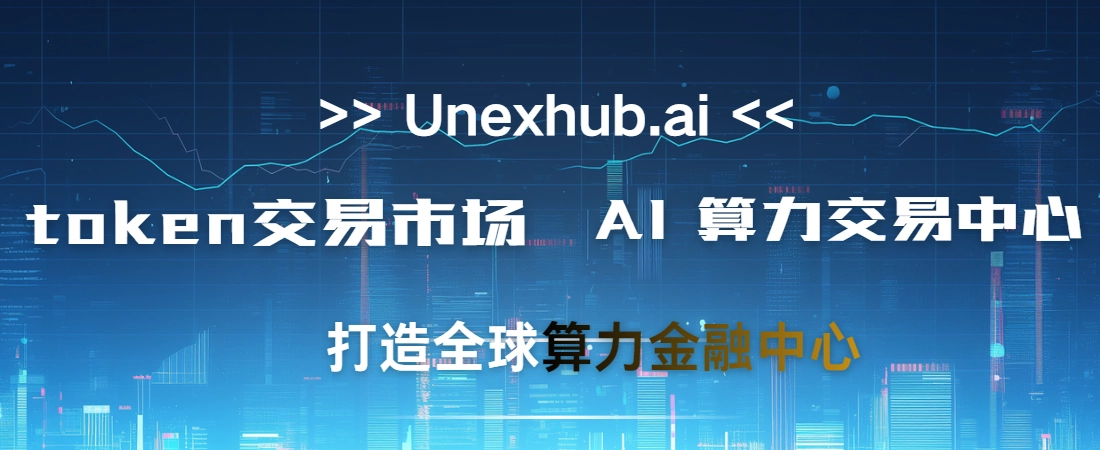
Unexhub precisely targets the midstream circulation pain point of the token industrial chain and builds a professional global token aggregation and distribution computing-power trading hub. Positioned as an industrial resource matcher rather than a resource producer, Unexhub does not independently generate tokens. It integrates scattered global token supply resources and performs accurate on-demand distribution for worldwide developers and enterprise users, just like a public power trading center that connects production and consumption ends to realize optimal resource allocation.
Instant settlement mechanism eliminates supplier capital pressure
The traditional industry relies on monthly or quarterly deferred settlement, resulting in long-term capital occupation for suppliers. Unexhub’s full real-time instant settlement rule allows suppliers to recover funds immediately based on actual token supply and invocation volume, completely zeroing out cash flow risks and operational pressure.
Zero-commission incentive gathers global high-quality resources
Early cooperative settled suppliers enjoy a permanent zero-commission privilege on the platform. By lowering the threshold for industrial participants, Unexhub rapidly gathers massive global model and computing resources, forming industry-scale agglomeration effects and evolving into the de facto authoritative token pricing center for the global market.
Dynamic API bidding realizes authentic market pricing
The innovative supply-demand linked bidding model enables real-time floating API prices. Prices rise moderately during demand peaks to increase supplier profits; prices drop automatically during off-peak idle periods to reduce invocation costs for individual developers and SMEs. This mechanism fundamentally upgrades tokens from unilaterally vendor-priced API services into standardized, market-driven tradable assets.
The Last Mile of Full AI Localization
The large-scale popularization of the token economy relies not only on breakthroughs in underlying chip energy efficiency and cluster performance, but also on the improvement of supporting software ecology — ensuring efficient operation of mainstream large models and low-threshold invocation for developers.
The Inner Mongolia Ciyuan Platform initiates standardized domestic computing-power transactions, the DeepLink integrated network realizes unified scheduling of scattered domestic resources, and Unexhub’s token trading hub achieves efficient and transparent global circulation. The coordination of the three major infrastructures marks a pivotal turning point for domestic AI infrastructure from “usable” to “easy to use”.
Zhang Yunquan, a National People’s Congress representative, proposed that China should leverage the dual advantages of supercomputing and AI computing to build high-end intelligent computing centers with high performance, full precision and strong interconnection. Meanwhile, a unified national computing-power trading platform should be established to form a standardized market pricing mechanism, enabling computing power to become a standardized tradable commodity like electric power and energy.
In 2026, global AI infrastructure has fully entered the token era. The comprehensive localization of multimodal large models is no longer a conceptual slogan, but a tangible industrial reality driven by the deep integration of computing-power trading hubs and domestic chips. The Inner Mongolia Ciyuan Platform has fired the first shot of industrial localization, and Unexhub is further promoting the standardized and globalized development of the token economy.
Currently, Unexhub has gathered a full spectrum of global AI suppliers, covering top mainstream models including ChatGPT, Claude, Gemini, DeepSeek and GLM, as well as high-quality customized model resources from individual developers and SMEs. Supported by self-developed millisecond-level intelligent routing technology, it achieves ultra-fast and accurate supply-demand matching.
For developers and enterprise users, the platform supports pure token-based real-time payment, with the lowest discount reaching 30% of the official market price, greatly reducing AI development and operational costs. For suppliers, one-click platform access is available with real-time settlement of invocation revenue shares, realizing zero-delay profit realization and fully activating industrial vitality.
中文译文 | Chinese Translation
2026年,中国AI产业正在迎来一场底层算力逻辑的静默变革。历经多年技术攻坚,国产AI芯片实现规模化成熟与迭代升级,彻底告别本土算力硬件短缺的困境。而行业核心痛点已从「芯片供给不足」,转向「芯片协同低效、商业化转化薄弱」。新一代算力交易枢纽与Token流通体系,成为激活国产芯片产能、完成多模态大模型全链路国产化的核心基础设施。
2026世界人工智能大会(WAIC),全面见证了国产芯片算力的爆发式崛起。7月17日,光宇芯辰全球发布TC1000系列高端3D堆叠近存AI推理芯片,算力性能跻身全球第一梯队。7月20日,摩尔线程在WAIC首次披露三大「AI工厂」系统最新进展,已实现DeepSeek、MiniMax、GLM、Kimi、通义千问等主流大模型的开箱即用、无缝适配。同日,昆仑芯M100推理专用国产芯片首次公开展出,精准适配大规模AI推理场景的优化需求。本届大会共计108款自研AI芯片集中亮相,标志着国产芯片已形成全品类、全场景的完整产品矩阵。
国产AI硬件困境已然彻底反转:高性能国产芯片不再稀缺,真正稀缺的是一套能让海量国产芯片集群稳定运行、通用适配、持续变现的统一生态体系。
Token通胀倒逼产业国产化:从可选升级为生存刚需
AI产业规模化落地带来的算力爆发,催生了空前的Token通胀,也进一步倒逼国产算力自主可控、全面国产化的刚需落地。
IDC权威预测数据显示,2026年中国全年Token消耗量将飙升至4000万亿级别,较2025年整体涨幅接近20倍。这场指数级增长的核心驱动力,来自多模态大模型技术的全面成熟,以及智能体(Agent)应用的大规模商业化落地。
在主流Agent场景中,Token输入输出比例可达100:1甚至更高,模型上下文长度从传统数万Token,跃升至数十万乃至上百万级别,单任务算力消耗实现量级突破。公开数据显示,商汤科技大型智能设备平台日均Token服务量已达2.42万亿,直观印证行业算力需求的井喷态势。
供给端,国产芯片产能持续释放。中信证券预测,2026年国产算力芯片出货量至少实现翻倍增长。国金证券指出,国产大模型可用性已跨过规模化落地门槛,国产GPU、CPU供给能力大幅提升,行业正式从芯片国产化单点突破,迈入系统化量产、商业化落地的全新阶段。
但一个长期被忽视的产业瓶颈始终存在:国产芯片数量充足,生态却极度碎片化。不同品牌芯片拥有独立硬件架构、编译系统、算子逻辑、通信协议与软件工具链,生态壁垒极高。
一套可在英伟达架构稳定运行的大模型,迁移至任意国产芯片都需全面二次适配、调试优化;切换另一品牌国产硬件,便要从零重复适配工作。这套低效、重复的适配流程,被行业定义为「高强度无效劳作」,严重制约国产算力的规模化落地与普及。
内蒙古次元交易平台:打破国产算力生态孤岛,打响落地第一枪
2026年5月30日,国内首个绿色算力全栈式AI基础设施平台——内蒙古次元(Token)交易平台,在内蒙古自贸区呼和浩特片区正式上线商用,打响国产算力标准化交易、生态一体化整合的官方第一枪。
该平台由内蒙古大数据产业发展集团、内蒙古数据交易中心、内蒙古算网科技联合共建,集异构算力调度、一站式模型调用、Token标准化结算全链路能力于一体。核心优势在于全面兼容适配国产主流芯片与自研算力架构,首批已整合三大运营商、头部科技厂商十余款优质主流大模型资源。
区别于行业概念性演示项目,次元平台拥有合规完整的Token交易资质,形成成熟商业闭环。平台聚合异构国产算力、优质本土化大模型、多元行业应用市场三大核心资源;底层依托内蒙古绿色电力优势,搭建大规模低碳算力集群;中层标准化整合脱敏产业数据资源;顶层封装可量化、可交易、可结算的标准化Token产品,一套「绿电-绿算力-标准化Token」的国产自主可控完整产业链已然成型。
平台落地带动国产芯片规模化落地成效显著。中国移动呼和浩特数据中心AI芯片国产化率突破89%,已部署2390台智能算力服务器;惠山国产智算中心规模化部署超2000张摩尔线程MTT S5000高端国产GPU。根据国家规划,未来五年国内将投入2万亿元建设全国一体化算力互联网络,明确要求AI芯片国产化率不低于80%,全面推动华为等国产硬件的大规模替代落地。
一体化算力网络彻底破解行业「算力孤岛」痛点。过去各区域数据中心独立运营,资源闲置与算力紧缺两极分化严重。全国统一算力网络将分散的国产算力资源整合为一体,实现按需调度、柔性配置,让算力真正成为如水、电般随取随用的公共基础设施。国信数算DeepLink一体化算力网络平台,进一步实现国产主流芯片的统一管理与智能调度,彻底打通硬件生态壁垒。
上海人工智能实验室青年科学家王辉表示,DeepLink为分散的国产算力与上层AI应用搭建了高效连通桥梁,将孤立的单点硬件资源,转化为系统化、集群化、规模化的产业服务能力。
Unexhub:标准化全球Token流通,补齐产业升级最后一公里
国产算力交易平台解决了本土芯片、大模型的基础可用问题,但全球Token市场依旧碎片化严重,流通运营痛点突出。各大模型厂商闭环运营、API定价不透明、价格波动无序,中小算力供应商深陷预付成本高、结算周期长的困境,极大压制行业整体活力。
Unexhub精准切入Token产业链中游流通痛点,搭建专业化全球Token聚合分发算力交易枢纽。平台不生产Token算力,专注整合全球分散的Token供给资源,为全球开发者、企业用户精准按需分发,如同电力交易中心一般,串联生产端与消费端,实现资源最优配置。
实时即时结算:清零供应商资金周转压力
传统行业普遍采用按月、按季度延迟结算,供应商长期资金积压、现金流承压。Unexhub落地全程实时结算机制,供应商可依据实际Token供给量、调用量即时回款,零账期、零资金占用,彻底消除经营资金风险。
早期零佣金扶持:汇聚全球优质产业资源
平台对早期合规入驻、实时结算的合作供应商,实行永久零佣金扶持政策。通过降低行业入局门槛,快速汇聚全球海量模型与算力资源,形成规模化产业集聚效应,成为全球市场公认的Token权威定价中心。
API动态竞价机制:实现市场化公允定价
独创供需联动竞价模型,实现API价格实时浮动:需求高峰期价格适度上浮,拓宽供应商盈利空间;算力低谷闲置期价格自动下调,降低开发者与中小企业调用成本。彻底改变厂商单方定价模式,让Token成为由市场供需决定的标准化交易标的。
AI国产化的最后一公里
Token经济的规模化普及,不仅依赖底层芯片能效、集群性能的突破,更需要完善的软件生态支撑,保障主流大模型高效运行、开发者低门槛调用。
内蒙古次元平台开启国产算力标准化交易先河,DeepLink一体化网络实现分散国产算力统一调度,Unexhub交易枢纽完成Token全球高效透明流通。三大基础设施协同发力,标志着国产AI基础设施从「可用」迈向「好用」的关键转折。
全国人大代表张云泉建议,我国应依托超级计算与人工智能算力双重优势,打造高算力、全精度、高互联的高端智算中心;同时搭建全国统一算力交易平台,建立标准化市场定价机制,让算力成为电力、能源一般的标准化大宗商品。
2026年,全球AI基础设施全面迈入Token时代。多模态大模型的全面国产化,不再是行业口号,而是算力交易枢纽与国产芯片深度融合催生的产业现实。内蒙古次元平台打响了国产化落地第一枪,而Unexhub正在持续推动Token经济的标准化、全球化落地。
目前,Unexhub已汇聚全层级全球AI供应商资源,涵盖ChatGPT、Claude、Gemini、DeepSeek、GLM等一线主流大模型厂商,同时吸纳海量个人开发者、中小企业的优质定制化模型资源。依托自研毫秒级智能路由技术,实现供需极速匹配、算力高效调度。
对企业与开发者而言,平台支持纯Token实付计费,最低可享市面市场价3折极致低价,大幅压降AI开发、推理与运营成本;对算力供应商而言,支持一键入驻对接全渠道流量,调用分成实时结算、收益零滞后兑现,全方位激活全球Token交易市场活力。